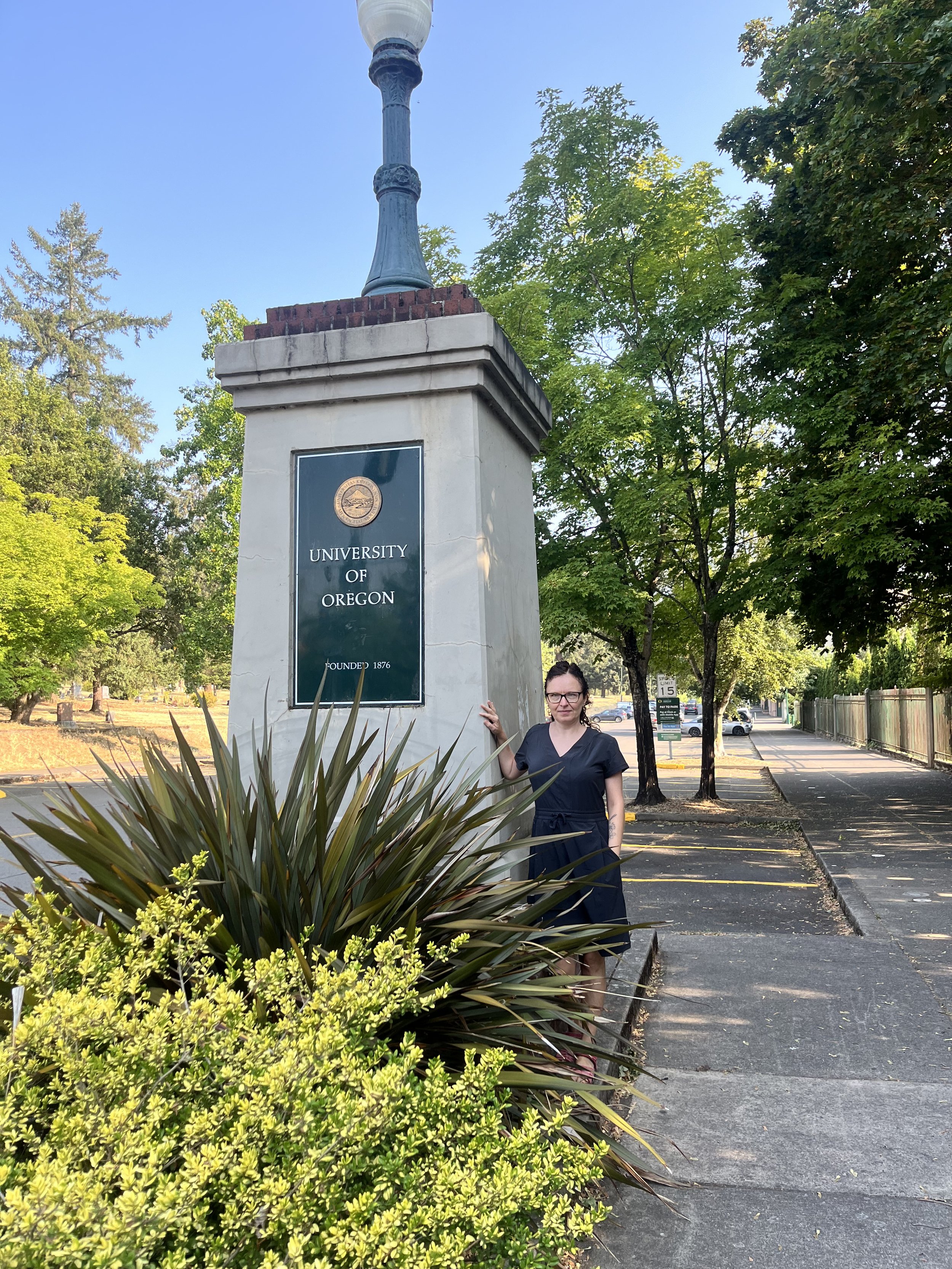
Go Ducks! University of Oregon archival treasures
In August, our team members Justyna Włodarczyk (PI) and Joanna (Asia) Ziarkowska had the pleasure of visiting two archives: the University of Oregon and Boise State University.
The University of Oregon Special Collections and Archives has particularly strong holdings in children’s literature and cinema studies—which happens to be exactly what we needed for this project. Justyna dug through the Vance J. Hoyt papers, while Asia waded through the Scott O’Dell collection.
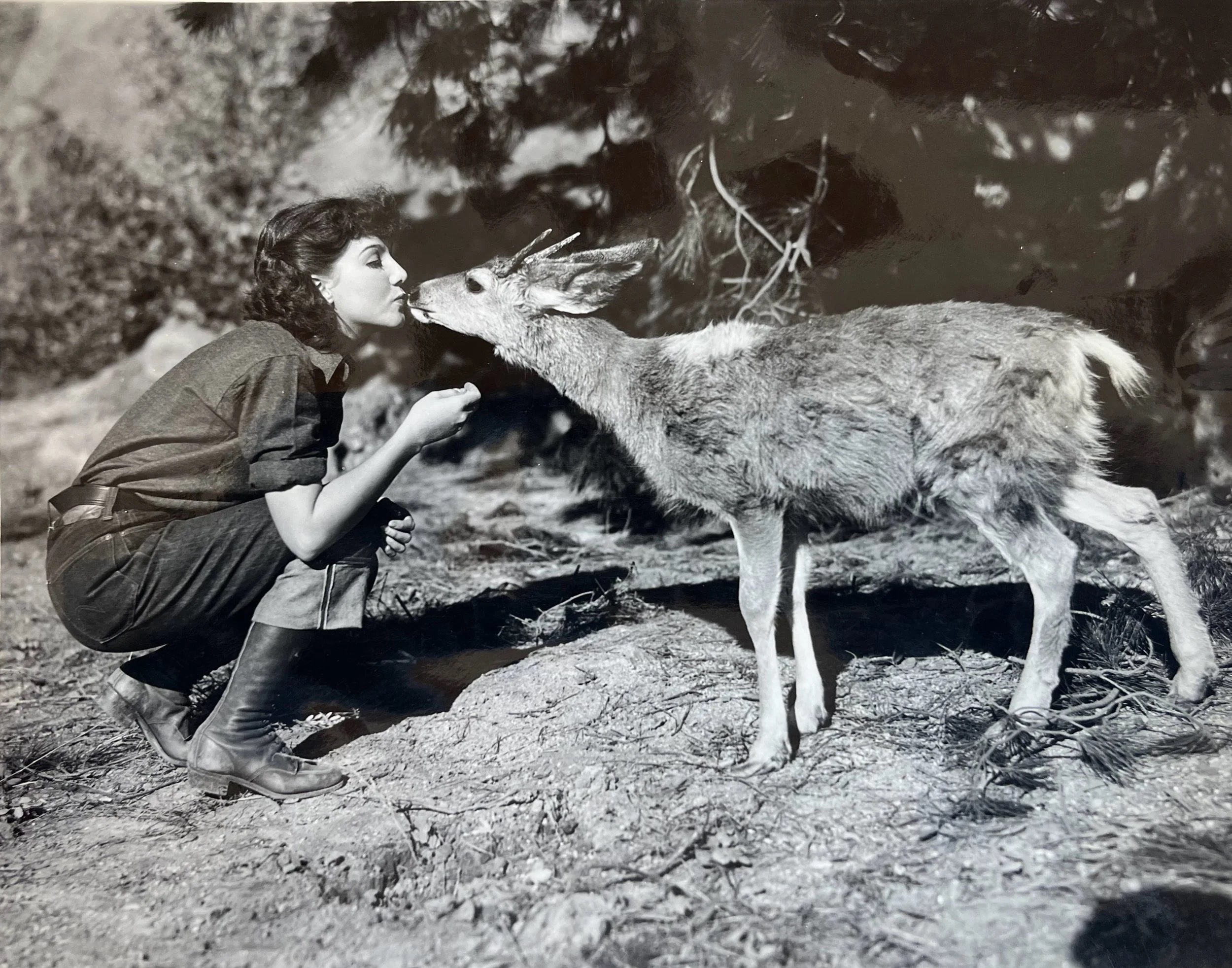
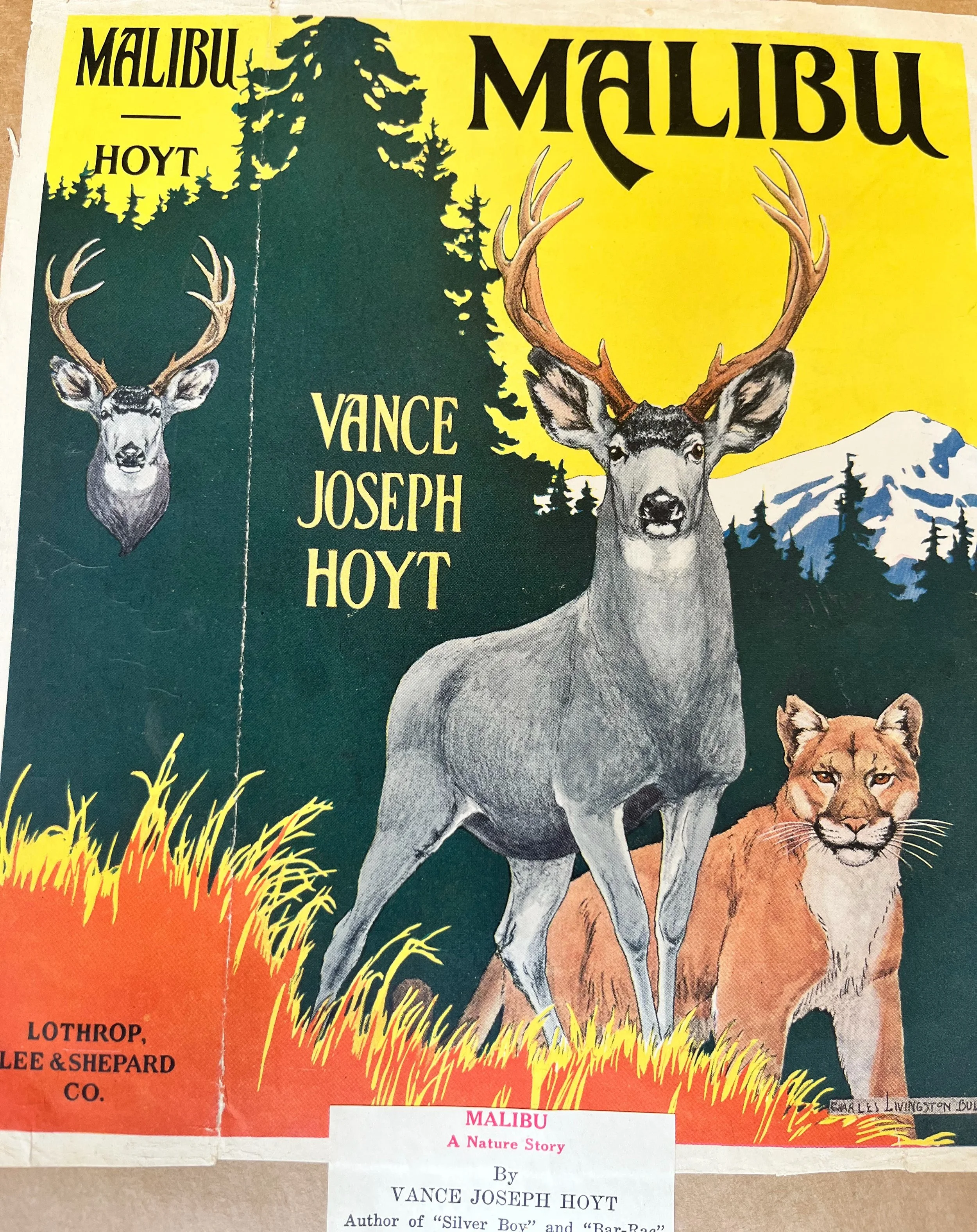
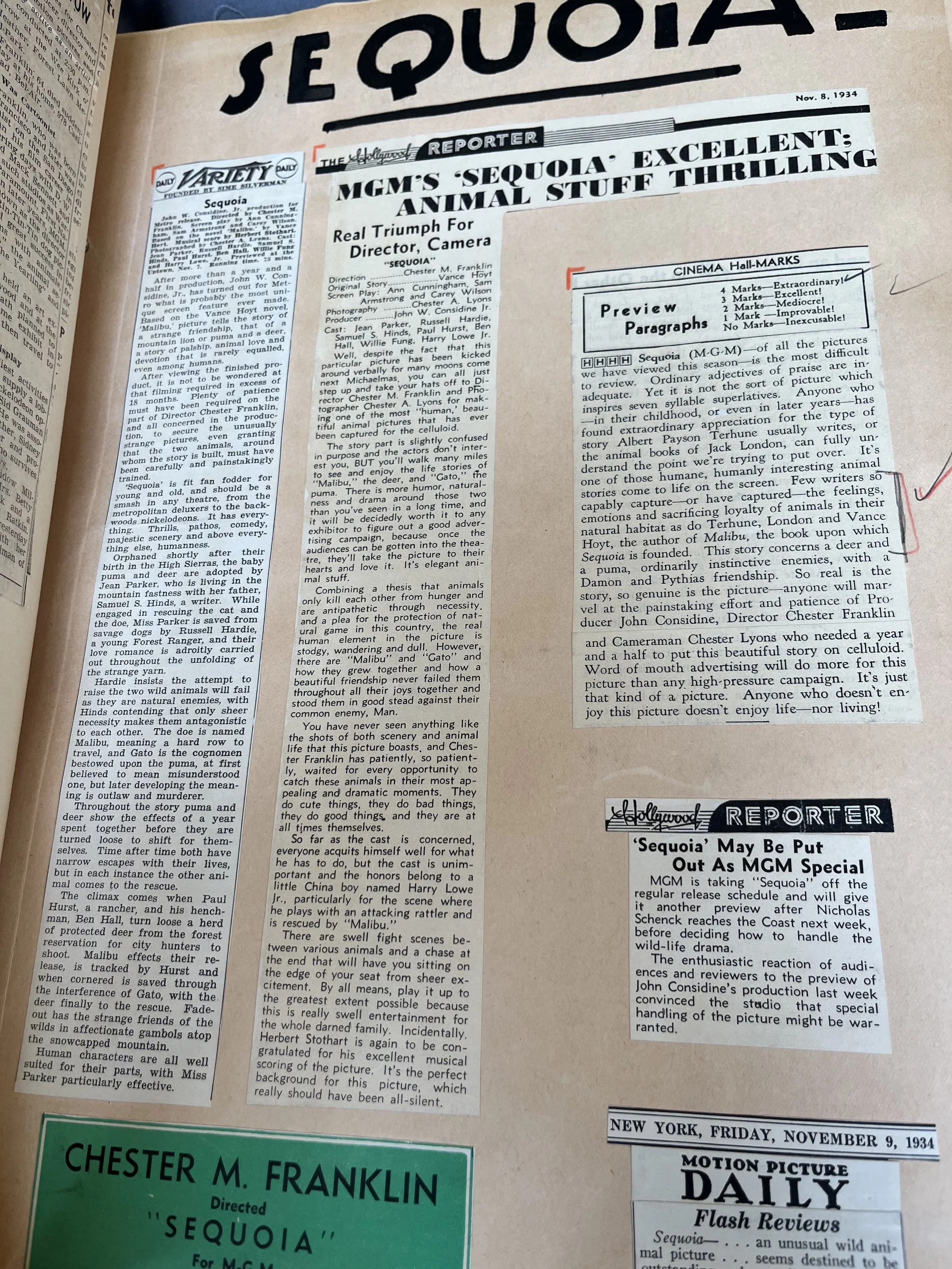
Vance Joseph Hoyt was a physician by training and a passionate California naturalist who expressed his love of the outdoors and animals through journalism and children’s fiction. His best-known novels include Malibu: A Nature Story (1931), which was adapted for the screen as Sequoia in 1934; later editions of the novel were also published under the title Sequoia. The story centers on the relationship between a fawn and a mountain lion who, after being orphaned, grow up together and form an unlikely but powerful bond.
This plot immediately caught Justyna’s attention. She has previously worked on the aesthetics of animal “odd couples” and wanted to explore what happens to such relationships in the process of adaptation. On screen, the dominant aesthetic for portraying interspecies friendships tends to be cuteness—think Bambi and Thumper, although Malibu and Gato predate them and, importantly, are live animals rather than animated characters. Cuteness, however, is largely a visual aesthetic, which means that it often becomes much more pronounced when a story moves from page to screen. The adaptation also contains a love plot that is completely missing from the original: this is not unusual for animal stories in early cinema; for example, the 1921 Black Beauty was not really about the horse but about a love story between the human protagonists. Similarly, the 1935 The Call of the Wild added a romantic plot to showcase the human star of the movie–Clark Gable.
The Vance J. Hoyt collection at Oregon proved to be a treasure trove. It contains extensive material on the production of Sequoia, including extensive evidence of Hoyt’s intense involvement in the making of the film and information on sourcing the animal actors and working with them. These materials will feed directly into an article Justyna is currently developing on animal cuteness and adaptation practices.
Meanwhile, Asia is working on Scott O’Dell’s Island of the Blue Dolphins and its 1960s screen adaptation—a really bad film, which has prompted the surprisingly productive question of what, exactly, makes it so dramatically unwatchable. The O’Dell papers offered a chance to investigate what happened as the novel made its way to the screen and what the adaptation process might reveal about the film’s many shortcomings.
To make the most of their time in Eugene, Justyna and Asia also explored materials related to Norma Mansfield Bicknell and Hal G. Evarts. Bicknell is a fascinating writer of 1930s young adult fiction whom Justyna first encountered while researching representations of wolf-dogs in literature. In 1935, Mansfield Bicknell published Keeper of the Wolves, an unusual story for its time in which a girl drives a dog sled and tames a pack of apparently wild wolves. Her fiction bears a striking resemblance to both the films—and the life—of Nell Shipman, whose papers Justyna examined during the next stop on the research trip, in Boise.
But more about that in the next blog post.
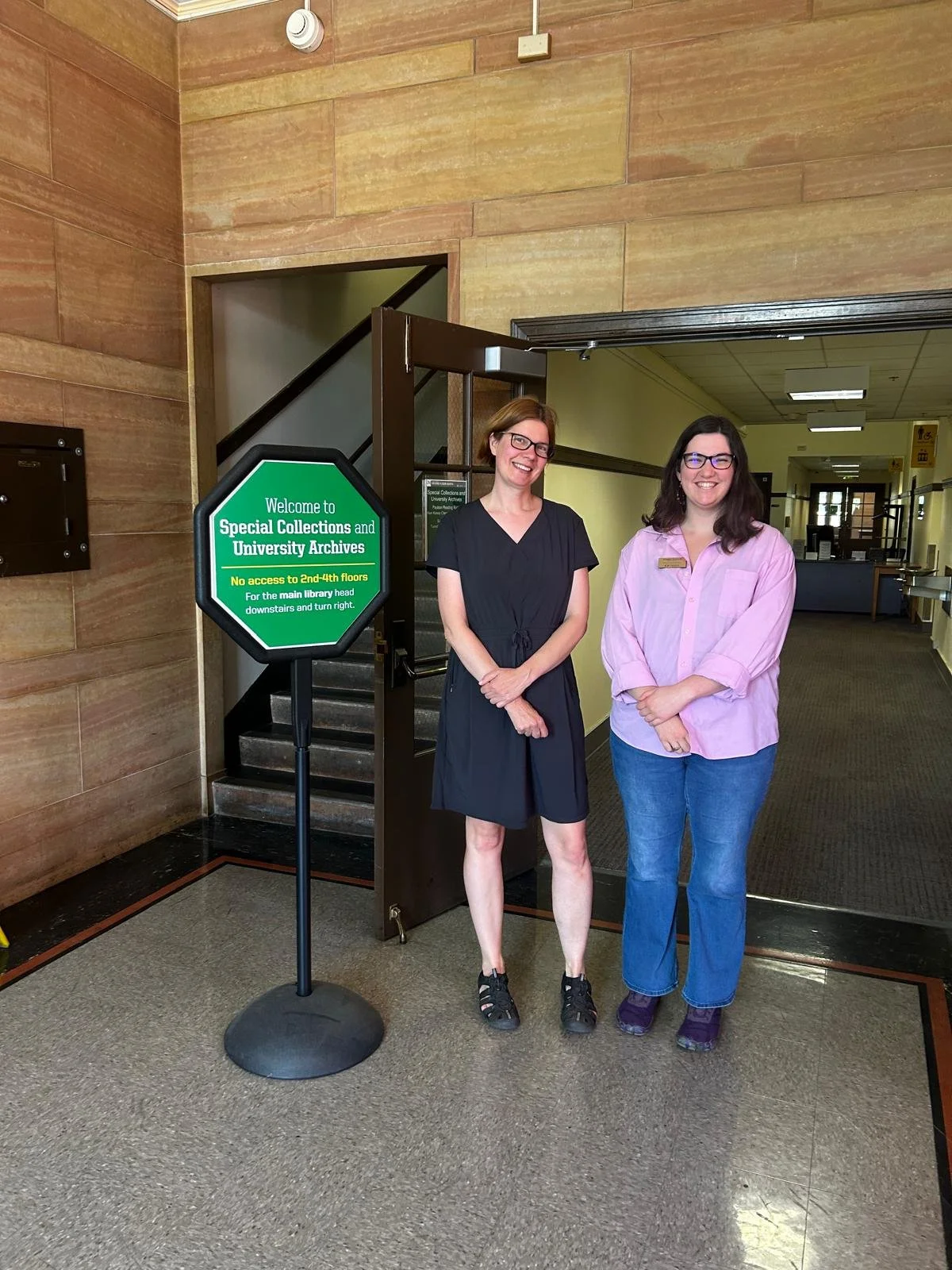
For now, we would like to thank the staff of the University of Oregon Special Collections, and especially Reference Services Archivist Maggie Dobson, for making our time in the archives so smooth, productive, and enjoyable.